For many of us the life changed dramatically in the last few weeks du to the coronavirus. Luckily I can say the not much changed for myself, as I was on holidays anyway. The most annoying however is that I had to postpone/cancel some museum visits I was really looking forward to. To compensate for that let me take you on a small virtual and philatelic trip to some of Germany's biggest and most important museums.
Museums are places to collect artifacts from the past, to conduct research with them and to present them to the public. Germany has nearly 7000 museums and thus it is one of the countries with the highest number of museums in the World. Many of them show internationally important collections, but usually none is among lists of famous museums around the World, as there are no such famous museums like the Louvre, the Met, the Prado or the Uffizi here in Germany. Generally it is also not very easy to actually find a list of Germany's biggest and most important museums, so I decided to make my own list both for future visits and my collection of museum postcards. A good start to make this list is the wonderful German stamp series "Schätze aus Deutschen Museen" (Treasures from German Museums), which started in 2013 and just came to an end this year with a stamp about Van Gogh. While I always wondered why the series just includes art, I now realised that it is actually a small walkthrough of art history with interesting exhibits from some of Germany's leading art museums.
The stamps show
- Nefertiti Bust, Neues Museum in Berlin (issued 02-01-2013)
- Ishtar Gate, Pergamon Museum in Berlin (issued 02-01-2013)
- The Creation of the Animals by Master Bertram, Kunsthalle Hamburg (issued 05-06-2014)
- Visitation by Rogier van der Weyden, Museum of Fine Arts in Leipzig (issued 04-12-2014)
- Mourning Women by Tilman Riemenschneider, Württemberg State Museum in Stuttgart (issued 01-10-2015)
- Adoration by the Shepherds by Martin Schongauer, Painting Gallery in Berlin (issued 01-11-2015)
- Emperor Charles V by Titian, Alte Pinakothek in Munich (issued 07-04-2016)
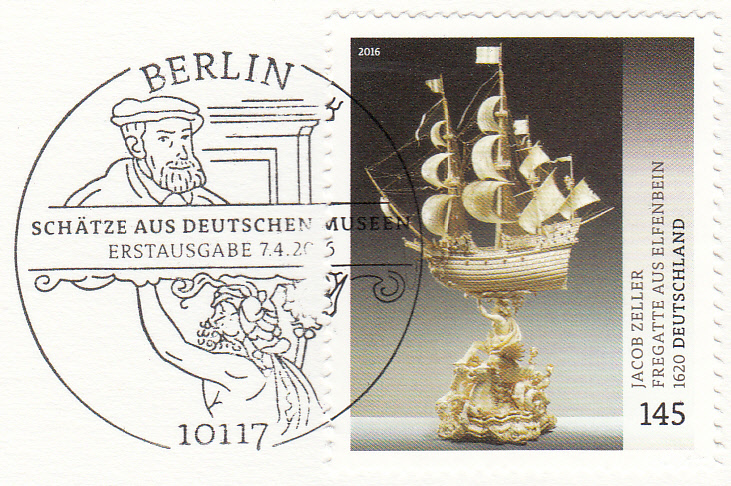
- Ivory Frigate by Jakob Zeller, New Green Vault in Dresden (issued 07-04-2016)
- The Girl with the Wine Glass by Johannes Vermeer, Herzog Anton Ulrich Museum in Braunschweig (issued 02-01-2017)
- Toucan, Demoiselle Crane und Black Crowned Crane in a Landscape by Jean-Baptiste Oudry, Staatliches Museum Schwerin at Ludwigslust Palace (issued 02-01-2017)
- Goethe in the Roman Campagna by Johann Heinrich Wilhelm Tischbein, Städel Museum in Frankfurt (issued 07-06-2018)
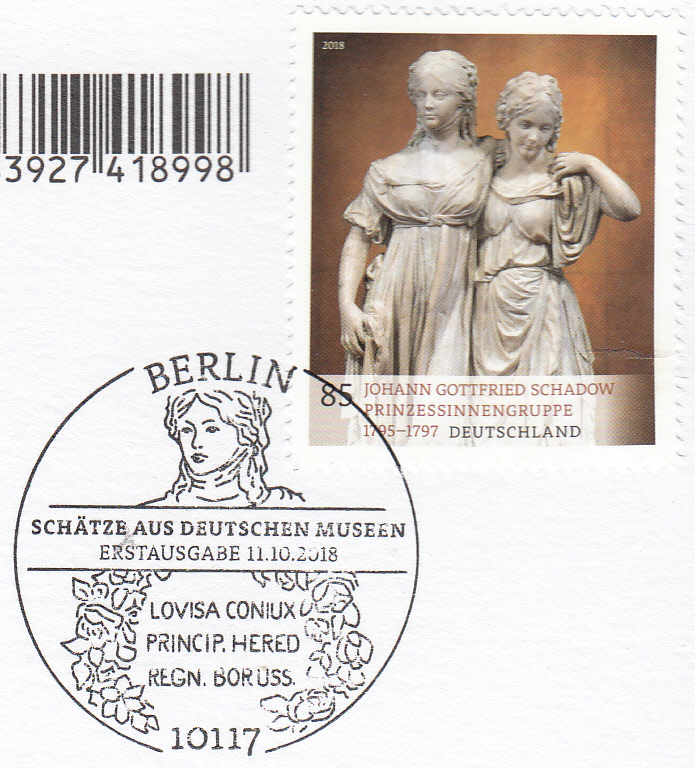
- Princesses Group by Johann Gottfried Schadow, Old National Gallery in Berlin (issued 11-10-2018)
- The Lonely Tree by Caspar David Friedrich, Old National Gallery in Berlin (issued 02-01-2019)
- Field with Poppies by Vincent van Gogh, Kunsthalle Bremen (issued 02-01-2020)

Keeping this in mind, we now already have a list of important art museums and only other types of museums like natural history or history museums have to be added. Below you can now find my complete list of Germany's big and important museums. All of them surely are worth a visit, this list however can never be really complete, as there are just too many museums in Germany to keep track of all of them. If you know of any other German museum which deserves an addition to the list please post a comment. Under the list you can also see more stamps about German museums both from the series and otherwise.
Bold are the museums which I think also have big international importance.
3Landesmuseen in Braunschweig - include the Braunschweigisches Landesmuseum, the Herzog Anton Ulrich Museum and the Natural History Museum; the Braunschweigisches Landesmuseum is among the large history museums in Germany; the Herzog Anton Ulrich Museum and the Natural History Museum are the oldest museums in Continental Europa; the Herzog Anton Ulrich Museum houses one of the most important art collections in Germany, a highlight in its collection is the original Brunswick Lion
Baden State Museum in Karlsruhe - located in Karlsruhe Palace; important art, cultural history and regional history collections for Baden
Bauhaus Museum Dessau - constructed for the Bauhaus jubilee in 2019, second-largest Bauhaus collection in the World
Bavarian Army Museum in Ingolstadt - museum for the military history of Bavaria
Bavarian National Museum in Munich - one of the most important museums of decorative arts in Europa
Buchenwald Concentration Camp - one of the first and the largest of the concentration camps within Germany's 1937 borders, one of the better known concentration camp memorials in Germany
Bundeswehr Military History Museum in Dresden - one of the large history museums in Germany and one of the largest military history museums in Europa, after a renovation the old building has a deconstructivist wedge designed by Daniel Libeskind
Cultural History Museum in Magdeburg - known for its special exhibitions, home to the original Magdeburg Rider
Dresden State Art Collections - one of the most renowned and oldest museum institutions in the World; shown at different locations in Dresden; the most famous parts are the Old Masters Painting Gallery, the New Masters Gallery and the Green Vault; the Old Masters Painting Gallery houses paintings from the 15th to the 18th century including major Italian Renaissance works like the Sistine Madonna; the Green Vault houses the largest treasure collection in Europa
European Hansemuseum in Lübeck - largest museum about the Hanseatic League in the World
Germanisches Nationalmuseum in Nuremberg - largest museum of cultural history in the German-speaking World; large collection of items relating to German culture and art extending from prehistoric times through to the present day
German Historical Museum in Berlin - one of the large history museums in Germany, one of the most important and most visited museums in Berlin, place of enlightenment and understanding of the shared history of Germans and Europeans
German Hygiene Museum in Dresden - follows the spirit of the first International Hygiene Exhibition in 1911, "Cultural Lighthouse" (a cultural institutions of national importance in the former East Germany)
German Mining Museum in Bochum - one of the most visited museums in Germany, largest mining museum in the World, renowned research establishment for mining history
German Museum in Munich - largest museum in Munich, largest museum of science and technology in the World, one of the most visited museums in Germany
German Oceanographic Museum and Ozeaneum in Stralsund - museum about the oceans and everything connected with them, since the opening of the Ozeaneum in 2008 it has become the most visited museum in Northern Germany, the Ozeaneum got the European Museum of the Year Award in 2010
Grassi Museum in Leipzig - includes the Ethnography Museum, Musical Instruments Museum and Applied Arts Museum; "Cultural Lighthouse"
Halle State Museum of Prehistory - one of the large archaeological collections in Germany, highlights are the Nebra Sky Disk and the Hornhausen Rider Stele
Haus der Geschichte in Bonn - museum about the German history from 1945 until the present, one of the large history museums in Germany, one of the most visited museums in Germany
Hessian State Museum in Darmstadt - one of the oldest and biggest museums in Germany, houses exhibitions about art, cultural and natural history
Humboldt Forum in Berlin - a museum dedicated to human history, art and culture, considered the "German equivalent" of the British Museum, houses the non-European collections of the Prussian Cultural Heritage Foundation
International Maritime Museum in Hamburg - housed in Hamburg's oldest preserved warehouse, home to a private collection of over 40000 items and 1million photographs with a maritime connection
Jewish Museum in Berlin - largest Jewish museum in Europa and one of the most visited museums in Berlin, shows artifacts from two millennia of German-Jewish history, known for its deconstructivist building by Daniel Libeskind
Klimahaus in Bremerhaven - museum about climate and climate change, offers its visitors the possibility of a virtual journey along the 8th line of longitude
Kunsthalle Bremen - only German museum with an extensive art collection from the 14th to 21st century which is still in private ownership
Kunsthalle Hamburg - one of the largest art museums in Germany, shows artworks from most of the great names of Europa's art history, highlight of the collection is Caspar David Friedrich's "Wanderer above the Sea of Fog"
Lower Saxony State Museum in Hanover - largest public museum in Lower Saxony, shows exhibitions about art, archaeology, ethnology and natural history
Museum am Rothenbaum in Hamburg - one of the largest museums of ethnology in Europa
International Maritime Museum in Hamburg - housed in Hamburg's oldest preserved warehouse, home to a private collection of over 40000 items and 1million photographs with a maritime connection
Jewish Museum in Berlin - largest Jewish museum in Europa and one of the most visited museums in Berlin, shows artifacts from two millennia of German-Jewish history, known for its deconstructivist building by Daniel Libeskind
Klimahaus in Bremerhaven - museum about climate and climate change, offers its visitors the possibility of a virtual journey along the 8th line of longitude
Kunsthalle Bremen - only German museum with an extensive art collection from the 14th to 21st century which is still in private ownership
Kunsthalle Hamburg - one of the largest art museums in Germany, shows artworks from most of the great names of Europa's art history, highlight of the collection is Caspar David Friedrich's "Wanderer above the Sea of Fog"
Lower Saxony State Museum in Hanover - largest public museum in Lower Saxony, shows exhibitions about art, archaeology, ethnology and natural history
Museum am Rothenbaum in Hamburg - one of the largest museums of ethnology in Europa
Museum Barberini in Potsdam - art museum with a focus on Impressionist art showing the collection of Hasso Plattner
Museum Folkwang in Essen - one of the leading museums of modern art in the World in the 1920s and 1930s, heavy losses during the Nazi era, today one of the most visited museums in Germany
Museum Island in Berlin - includes the Altes Museum, Neues Museum, Old National Gallery, Bode Museum and Pergamon Museum; one of the most important museum complexes in Europa; mainly archaeological, art and coin collections are shown; part of the Berlin State Museums; highlights include the Nefertiti Bust and the Pergamon Altar; UNESCO World Heritage Site
Museum Koenig in Bonn - one of the three largest natural history museums in Germany, important site of Germany's democratic restart after World War II
Museum Ludwig in Cologne - one of the most important museums of modern art in Europa, especially famous for its Picasso and Pop Art collections
Museum of Communication in Berlin - housed in the former Imperial Post Office, one of the largest postal museums in the World, highlights include Mauritius "Post Office" stamps
Museum of Fine Arts in Leipzig - one of the largest art museums in Germany, often shows special exhibitions
Natural History Museum in Berlin - one of the three largest natural history museums in Germany, highlights include the dinosaurs and the Archaeopteryx
Naturmuseum Senckenberg in Frankfurt - one of the three largest natural history museums in Germany, houses the largest exhibition of large dinosaurs in Europa and many originals from the Messel Pit
Nuremberg Transport Museum - consists of the Deutsche Bahn's own DB Museum and the Museum of Communications, one of the oldest technical history museums in Europa, anchor point of the European Route of Industrial Heritage
Painting Gallery in Berlin - part of the Berlin State Museums, one of the World's leading collections of European paintings from the 13th to the 18th century
Pinakotheken in Munich - includes the Alte Pinakothek, the Neue Pinakothek and the Pinakothek der Moderne; part of the Bavarian State Painting Collections, the Alte Pinakothek is one of the oldest galleries in the World and houses a significant collection of Old Master paintings, the Neue Pinakothek is one of the most important museums of art of the nineteenth century in the World, the Pinakothek der Moderne finally is one of the World's largest museums for modern and contemporary art
Roemer- und Pelizaeus-Museum Hildesheim - third largest museum of Egyptian antiquities in Germany and among the thirty largest in the World, also houses an important collection of Ancient Peruvian art and the second largest collection of Chinese porcelain in Europa
Romano-Germanic Museum in Cologne - houses a large collection of Roman artifacts from the Roman settlement of Colonia Claudia Ara Agrippinensium
Römisch-Germanisches Zentralmuseum in Mainz - important research institution for the Old World and its contact zones from the Stone Age to the Middle Ages
Sprengel Museum in Hanover - one of the most significant collections of modern art in Germany
Staatliches Museum Schwerin - includes branches in Schwerin, Güstrow and Ludwigslust; nationally known for its medieval collections, the main building in Schwerin is a masterpiece of Historicist architecture
Städel Museum in Frankfurt - one of the most important and prominent art museums in Germany, highlights of the collection include paintings by Sandro Botticelli, Johannes Vermeer and Johann Heinrich Wilhelm Tischbein's Goethe in the Roman Campagna
State Gallery in Stuttgart - includes the Old and New State Gallery, the New State Gallery is a masterpiece of Post-modernist architecture and turned the once provincial gallery into one of Europa's leading museums
Übersee Museum in Bremen - one of the most visited museums in Germany, houses a collection about natural history and ethnography
Wallraf-Richartz Museum in Cologne - one of the most important art museum in Germany, oldest museum in Cologne
Westphalian State Museum of Art and Cultural History in Münster - known for its special exhibitions
Württemberg State Museum in Stuttgart - main history museum in Württemberg


Museum Folkwang in Essen - one of the leading museums of modern art in the World in the 1920s and 1930s, heavy losses during the Nazi era, today one of the most visited museums in Germany
Museum Island in Berlin - includes the Altes Museum, Neues Museum, Old National Gallery, Bode Museum and Pergamon Museum; one of the most important museum complexes in Europa; mainly archaeological, art and coin collections are shown; part of the Berlin State Museums; highlights include the Nefertiti Bust and the Pergamon Altar; UNESCO World Heritage Site
Museum Koenig in Bonn - one of the three largest natural history museums in Germany, important site of Germany's democratic restart after World War II
Museum Ludwig in Cologne - one of the most important museums of modern art in Europa, especially famous for its Picasso and Pop Art collections
Museum of Communication in Berlin - housed in the former Imperial Post Office, one of the largest postal museums in the World, highlights include Mauritius "Post Office" stamps
Museum of Fine Arts in Leipzig - one of the largest art museums in Germany, often shows special exhibitions
Natural History Museum in Berlin - one of the three largest natural history museums in Germany, highlights include the dinosaurs and the Archaeopteryx
Naturmuseum Senckenberg in Frankfurt - one of the three largest natural history museums in Germany, houses the largest exhibition of large dinosaurs in Europa and many originals from the Messel Pit
Nuremberg Transport Museum - consists of the Deutsche Bahn's own DB Museum and the Museum of Communications, one of the oldest technical history museums in Europa, anchor point of the European Route of Industrial Heritage
Painting Gallery in Berlin - part of the Berlin State Museums, one of the World's leading collections of European paintings from the 13th to the 18th century
Pinakotheken in Munich - includes the Alte Pinakothek, the Neue Pinakothek and the Pinakothek der Moderne; part of the Bavarian State Painting Collections, the Alte Pinakothek is one of the oldest galleries in the World and houses a significant collection of Old Master paintings, the Neue Pinakothek is one of the most important museums of art of the nineteenth century in the World, the Pinakothek der Moderne finally is one of the World's largest museums for modern and contemporary art
Roemer- und Pelizaeus-Museum Hildesheim - third largest museum of Egyptian antiquities in Germany and among the thirty largest in the World, also houses an important collection of Ancient Peruvian art and the second largest collection of Chinese porcelain in Europa
Romano-Germanic Museum in Cologne - houses a large collection of Roman artifacts from the Roman settlement of Colonia Claudia Ara Agrippinensium
Römisch-Germanisches Zentralmuseum in Mainz - important research institution for the Old World and its contact zones from the Stone Age to the Middle Ages
Sprengel Museum in Hanover - one of the most significant collections of modern art in Germany
Staatliches Museum Schwerin - includes branches in Schwerin, Güstrow and Ludwigslust; nationally known for its medieval collections, the main building in Schwerin is a masterpiece of Historicist architecture
Städel Museum in Frankfurt - one of the most important and prominent art museums in Germany, highlights of the collection include paintings by Sandro Botticelli, Johannes Vermeer and Johann Heinrich Wilhelm Tischbein's Goethe in the Roman Campagna
State Gallery in Stuttgart - includes the Old and New State Gallery, the New State Gallery is a masterpiece of Post-modernist architecture and turned the once provincial gallery into one of Europa's leading museums
Übersee Museum in Bremen - one of the most visited museums in Germany, houses a collection about natural history and ethnography
Wallraf-Richartz Museum in Cologne - one of the most important art museum in Germany, oldest museum in Cologne
Westphalian State Museum of Art and Cultural History in Münster - known for its special exhibitions
Württemberg State Museum in Stuttgart - main history museum in Württemberg




 |
| Bauhaus Museum Dessau |
 |
| Dresden State Art Collections |
 |
| German Museum in Munich |
 |
| German Oceanographic Museum in Stralsund |
 |
| Haus der Geschichte in Bonn |
 |
| Kunsthalle Hamburg |
 |
| Museum Island in Berlin |
 |
| Natural History Museum in Berlin |
 |
| Naturmuseum Senckenberg in Frankfurt |
 |
| Württemberg State Museum in Stuttgart |